Pages

Wednesday, August 29, 2012

Ten releases and counting!

Just a quick entry to let you know that a lot of my short-term neighbors (ie birds in rehabilitation) have been released this week!

Remember the tiny, fluffy baby American Kestrel admitted a couple months ago?  She grew up strong and healthy, and was released on Sunday to a chunk of beautiful land up north.


The second-year Peregrine Falcon admitted a few months ago with high voltage trauma (HVT) from a powerline incident was a bit of a longshot:  HVT cases are difficult to heal, and her wounds had left her patagial tendon exposed on one wing.  The patagial tendon is critical to flight.  The wound took nearly two months of patient treatment by the Humans to heal, and then she had to regain her stamina in one of the large flight cages.  But soon enough she was flying like a champ, and was successfully released north of La Porte a few days ago!  The Human that released her said that when she flew off, she didn't just go find a perch to land on and take a rest, she kept flying, and flying, and flying...


Four immature Great Horned Owls were released last night.  They passed "rat school" a couple weeks ago, and have been perfecting feather condition since then.  The way the Humans here release Great Horned Owls is called a "soft release" through an apparatus called a "hack box".  Essentially, the birds were fed for a few days from a platform in the cage, so they became accustomed to getting their food there.  Then, last night the door from the feeding platform to the outside world was left open, and the Owls all flew off on their own into the night.  But since they're young birds with no real-world experience, and it's a drought year, it could be difficult for the birds to make ends meet, so the Humans will continue putting food on the platform for the next few weeks just in case they need to come back for a snack.  When they stop coming back for food, we know they're off being wild!

Great Horned Owl flying in a cage


Common Barn Owl experiencing those awkward teenage years
Two Common Barn Owls were released a couple of evenings ago, and flew silently over open fields, until they were out of sight.


And, finally, another American Kestrel and a mature Swainson's Hawk are both being released as I type this!  That's ten birds so far this week, and more are due to be sent on their way soon!  While all these releases are great news, I keep watching the main building and seeing how many newly injured birds are being admitted--there are a lot.  Things are not slowing down here at all.  West Nile Virus is really rearing it's head, and the Humans have received results from blood tests for over a dozen birds confirming WNV, and there are many, many others with WNV symptoms who are awaiting blood test confirmation.  So, as always, the work never ends!  But if you are as excited as I am about the ten releases listed above, please support us by clicking on the "donate now" link on the right sidebar!

Monday, August 27, 2012

Raptor vocalizations

I don't know if you remember, but last week when I wrote about Red-Tailed Hawks, I promised a blog entry dedicated to the Red-Tailed Hawk's notable scream and how it's used in Human media.  Well, I couldn't find any actual examples of the misusages, but you all know what I'm talking about:  the Wild Western movie focuses in on a desolate cabin in the hills....something isn't right, death is in the air...overhead the vultures are circling, and one of them calls out, "Kreeeee-aaaaaaa!"  Or the truck commercial that ends with a waving American flag and the majestic call of a Bald Eagle, "Kreeeeee-aaaaaaaa!" 

Yeah, right.  Bald Eagles sound about as majestic as mourning doves sound dangerous.  It simply isn't true.  The call you're most often hearing in the movies, the one that's attributed to almost any large bird except seagulls (thank goodness) is actually a Red-Tailed Hawk.  Does this sound familiar? 


So, you may be asking yourself, if that sound in the movie isn't actually what an Eagle or a Vulture sounds like, what do they sound like?  Well, I sorted through all the horrible YouTube videos out there to give you the best-available video clips of raptor calls.  Here, for instance, is the majestic Bald Eagle...clucking:

It's a wonderful sound, isn't it?  But it's just not what the Hollywood producers are looking for.  It doesn't strike fear or awe into the hearts of many the way the Red-Tailed Hawk does.  How about the Golden Eagle?  Any more majestic?  Not really.  Here's a pretty common sound from one:

Again, really interesting, but not awe-inspiring.  Then again, does an Eagle need to be any more awe-inspiring?  They're pretty darn impressive to begin with. 

Finally, what's with the Red-Tailed Hawk call being played when Vultures are circling?  As a critic of Human movies, I'm always noticing this error.  Turkey Vultures are mostly silent birds.  The only time you'll hear one vocalize is if you really disturb it, which, of course, is something you shouldn't do.  And when they vocalize, it is the farthest thing from a scream that you can imagine.  It's more of a hissing roar.  Honestly, I think Humans should use Turkey Vulture vocalizations in movies about dragons!  Here's an example:  

So there you have it.  Next time you hear an impressive, piercing call from a bird in a movie, be it an Eagle, a Vulture, a Hawk, or any other bird, maybe you'll notice it's the wrong bird entirely, then laugh at the ridiculousness of it.  And, on that note, I leave you with the chattering call of an American Kestrel.  This bird is not often depicted in movies, but it certainly has the voice and attitude for the silver screen! 


Please note: all these videos were found on YouTube and are not the property or responsibility of the Rocky Mountain Raptor Program. 

Thursday, August 23, 2012

Things to Be Happy About

In recent weeks, things haven't been all dark nights and dead mice at the RMRP.  What, would you prefer the Human phrase "sunshine and roses"?  Okay, things haven't all been sunshine and roses.  Recently many of the birds being admitted to the CCU have been broken beyond repair (multiple fractures, old necrotic wounds, etc).  These birds have been humanely euthanized, and while that's the kindest and most ethical thing to do with those cases, it still hurts to not be able to do anything to help.  In addition to the badly broken birds, the Humans are also admitting many young birds (lots of Swainson's Hawks) suffering from starvation, symptoms consistent with West Nile Virus, and often with traumatic injuries on top of all that.  While these cases are extremely labor-intensive, there is a reasonable chance of fixing and releasing them, and the Humans give care wherever there is hope!  Still, it's tiring and difficult work, so with an influx of such heartbreaking cases, I've decided to help keep spirits high by listing off six wonderful things that have happened in just the past couple of days! 

1.  This immature Kestrel is a probable West Nile Virus case (awaiting blood test confirmation).  He was so neurologically impaired that for his first couple weeks at the RMRP he couldn't stand on his own, and he didn't have the beak-eye coordination to eat on his own.  Now look at him!  Not only is he eating on his own and standing upright, but he can stand on one foot.  He still has a ways to go, but it's great to see him improving!

2.  The Humans released nine Swainson's Hawks into a kettle a couple days ago!  Every Swainson's Hawk that can be released into a migrating kettle is one less bird that has to be overwintered at the RMRP.  Fewer beaks to feed, less dollars spent, and, most importantly, more birds getting their second chance at freedom (and a trip to Argentina).
No, your screen is not dirty: those little black dots are all Swainson's Hawks
3.  This Cooper's Hawk grew up and was released today!


4.  A rehabbed Peregrine Falcon is flying like a champ, and is on track for release after finishing up a molt!

5.  A Common Barn Owl that was probably hit by a car tried to toe-dust yesterday.  Toe-dusting is something that Barn Owls do to scare away predators and other threats.  This bird suffered massive trauma and is being treated for her pain.  The fact that she was feeling well enough to try to be scary is great news!  The video below (not the RMRP's) will show you what toe-dusting is.

6. A Red-Tailed Hawk that was admitted with a fractured clavical was moved to a larger cage after time in the CCU, and quickly demonstrated that he can fly very well, thank you very much.  It's always nice to see a broken bone heal nicely! 

That's all I've got off the top of my head.  Not bad considering all that happened in the past three days.  Through good times and bad, the Humans at the RMRP will keep on taking care of every single raptor that comes across their threshold, and will keep on churning out success stories like these.  Thank you for your support!

Also, don't forget, the Open House is this Saturday from 11:00-3:00 at the main facility on Vine Drive!  Click the link for details and directions.  This facility closed to the public except on Open House days, so come on over for a chance to see what happens here behind the scenes.  There will be educational exhibits, lots of people to explain the ins-and-outs of the facility, and plenty of educational ambassadors on display.  Oh, and there will be snacks!  Hope to see you there!


Friday, August 17, 2012

Why Red-Tailed Hawks Are Awesome!


With the critical care cages at the Rocky Mountain Raptor Program steadily filling with sick and injured birds (it is the peak of busy season, after all) it's hard not to notice that a large portion of the newcomers are Red-Tailed Hawks.  This year's kids are all fledged and living life on their own, but not all of them are proving successful.  The summer's early drought in combination with the High Park Fire effects and the perfect climatic conditions for mosquitoes carrying West Nile Virus have created a difficult first year for a lot of birds.  Along with Swainson's Hawks, American Kestrels, and Great Horned Owls, the Red-Tailed Hawks are having a noticeably hard time of it.  So, with cages of sick Red-Tailed Hawks in the RMRP's care, what better time to write about how amazing they are?  Maybe the extra attention to their awesomeness will help bolster their spirits and make them well again.

You know what a Red-Tailed Hawk looks like, even if you don't realize it.  They're the hawks that you see soaring high above fields and hills while looking for lunch, or perched on a telephone pole scanning the ground for dinner.  Admittedly, there are many species of hawks that soar and perch on power poles, but Red-Tails are among the most common.

fpcs.edu
www.birdphotography.com
You've probably also noticed their namesake red tail at some point as it catches the sun mid-flight.  But did you know that immature Red-Tailed Hawks don't have a red tail until they're adults?  Until the bird is in its second year, the tail is gray with dark brown bars.  And because raptors don't drop all their feathers at once when they molt, the new red tail comes in one or two feathers at a time, so sometimes their tails look like this:

10000birds.com
Harlan's Hawk from schmoker.org
There are many variants of the Red-Tailed Hawk, including the Harlan's Hawk, which is such a strikingly different variant that some Humans consider it a separate species altogether.  Harlan's Hawks have blackish and white patterned feathers, variations in their tail coloration, and even have shorter primary flight feathers than other Red-Tailed Hawks.  For more pictures of Harlan's Hawks in Colorado click here.

Another famous thing about Red-Tailed Hawks is their call, but you may not have known who you were listening to.  The most common raptor noise in movies and on TV is the call of the Red-Tailed Hawk, but it's usually played in the movie when a Bald Eagle is on screen, or when a Turkey Vulture is seen hovering over a dying cowboy (also inaccurate).  In fact, there are so many comical misuses of the Red-Tailed Hawk's call that I have decided right now to write an entire separate article about it, so stay tuned!  I promise it will be funny and educational.

Educational Red-Tailed Hawk at the RMRP
Red-Tailed Hawks are not as big as Ferruginous Hawks, but they are still pretty big, and like most raptors the females are about 30% bigger than males.  Generally speaking, Red-Tailed Hawks weigh 2-4 pounds, and have a wingspan of about 4 feet.

Another reason they're pretty well-known is because they live all over North America.  Seriously.  You'd be hard pressed to travel anywhere on this continent and not find Red-Tailed Hawks.  They're almost as ubiquitous in North America as the Peregrine Falcon, but not quite.  Red-Tails live in every sort of ecosystem except continuous forest (they leave that to forest-dwellers like Goshawks) and the Arctic.  But everywhere else, from tropical islands to the Grand Canyon, you can find Red-Tails.  In fact, the densest population of these birds is in El Yunque National Forest in Puerto Rico.

Red-Tailed Hawks primarily eat rodents and other small mammals, but they'll also snack on birds (especially pigeons in cities) and snakes.  In fact, the Red-Tailed Hawk has a super-cool way of hunting poisonous rattlesnakes.  They spread their wings and tempt the snake with their feathers, kind of like a matador taunting a bull with a red cape.  When the snake strikes at the wing feathers, the bird reaches in with a foot and grabs the snake.  The National Geographic video below shows the matador move, and although they missed any footage of the snake striking at the wings, it's still cool to watch.


A few other facts that don't require an entire paragraph:

  • They're monogamous, only finding a new mate when their previous mate dies.  
  • Great Horned Owls like me are occasional predators of Red-Tailed Hawks, but not the other way around (that's right, I'm the top of the food chain).  
  • They're also known as chickenhawks, even though they're not very well known for hunting chickens.

Although nothing much is happening these days, the Cornell Red-Tailed Hawk Webcam is an excellent way to get a closer look at these birds.  Cornell installed two HD webcams at the Red-Tail nest on their campus, and you can tune in any time during breeding season to watch the male and female hawks build their nest, lay the eggs, incubate them, hatch them, and then raise and fledge the chicks.  Be sure to check it out next season!

The Humans at the RMRP admit dozens of Red-Tailed Hawks every year.  Many of them come in hit by cars, shocked on power lines, or [this year] sick with West Nile Virus.  Please send healing thoughts to those birds currently in the RMRP's care!  If you would like to support the care of these incredible birds, click the "Donate Now" link on the right side-bar!
Educational Red-Tailed Hawk for the RMRP
Don't forget you can subscribe to this blog in the sidebar to the right, and feel free to leave questions or comments below, or send them to talonsofdoom@gmail.com

Sunday, August 5, 2012

A Day in the Life

Good morning everyone!  Oh, but it's evening for you, isn't it?  I just wanted to share my observations from today, all the ins-and-outs of what went on at the Rocky Mountain Raptor Program today.  I kept this blog entry going all day long, so it should be accurate.  Today was a normal, average "day in the life", but not many of you know what a "day in the life" entails, so here we go!


6:45 am  The first Human arrives at the RMRP.  I've been awake all night, so I'm ready to head to bed, but the diurnal Humans are just getting started.  Technically, the morning shift (called "AM treatments") doesn't start until 7:00 am, but there's almost always a dedicated and hard-working staff member who wants to check on all of us while it's still quiet and calm at the Center.  Right now the field outside my cage is still, occasionally shifting in the morning breeze, and the robins and chickadees are just starting to call out with their calls of  "cheerio!", "chik-a-dee-dee-dee", and "cheeseburger!"

7:00 am  Everyone else arrives, by which I mean a few volunteers (between two and five of them, some old hands, some trainees), and a few summer interns.  The first time I see a Human today is about 7:05 am with Morning Bird Check.  Every time a new treatment (shift) begins, someone visits every single cage and makes sure the birds are okay.  The same thing happens at the end of the treatment.

7:15 am  Humans begin cleaning cages.  Right now there are two or three Humans in various cages, cleaning the walls, perches and gravel with hoses or buckets of water and disinfectant.  Then the Humans leave food in the cages for the birds, and leave them in peace for the rest of the day....

8:00 am  ...except when the bird needs medical care!  Birds in the outside cages are on weigh schedules to make sure they get a good, thorough going-over periodically.  This way the Humans can catch any problems before they become big issues, and they can better track the progress of birds who are in the healing process.  Around this time in the morning I can hear Humans going into the rehab cages to catch and examine the birds who are due for examination.  I often hear exclamations of "Wow, you're feeling better!" and mutterings of "One left wing primary blood quill number four...keel is a solid three...no foot wounds..." etc as they complete their examinations.  But for the most part it is quiet...the Humans don't want the wild birds to become accustomed the Human presence.

7:00-10:00 am   Meanwhile, inside the building... I can't see what's going on in there, but I know the gist after many years here.  There are Humans preparing food for the rest of the birds, busy in the kitchen with knives and scissors and thawed chickens and rabbits and mice.  There are Humans taking care of the Critical Care birds, the ones requiring close attention and daily care in the early stages of healing.  The staff members are filtering in to take care of all manner of administrative tasks--fundraising, accounting, medical records, scheduling, etc--, and volunteers are manning the phones to field calls from other Humans with information on injured Raptors all over the state.  It's a busy time of day.

10:00 am   Now that morning treatments are winding up (final bird check!), I can hear the sounds of other treatment crews arriving.  The sun is now out in full and the sky is clear.  Robins are busy eating bugs and worms in the field, and the resident Red-Tailed Hawks are screaming overhead.  One of them above me right now is a kid we released this year!  He was found in the adjacent neighborhood, cowering under a car and unable to fly well enough to survive.  He's now cruising above, screaming louder than the rest of his family combined.  The other treatment crews that are arriving right around now: Eagle Crew (to take care of the educational eagles at our secondary facility, the Environmental Learning Center); ELC crew (taking care of the hawks and vultures at the same facility); E1 crew to take care of the educational birds here at this facility; and individual Special Handlers to take care of the new and/or Special Needs birds here at the RMRP.  There are Humans moving around everywhere now, but all quietly and happily.  I hear Human laughter in a nearby cage as an Educational Ambassador does something unexpected, and the sounds of a Human coaxing a bird onto a scale.

11:15 am  This morning's E1 Crew is ready to take care of me!  For the third time today, a Human slides open the window to my cage and peeks in.  I see her eyes locate me, then search the rest of the cage for anything of concern:  where's my food?  Are there any hazards?  Did I do something unexpected last night, like break a blood quill?  She looks satisfied, and closes the window.  A few minutes later she comes in with a rake, bottle of disinfectant, a wad of paper towels, and a hose.  Within a few minutes my cage is spick-and-span, and I'm waiting for one of two things:  is today a weigh-day, or just a food-drop day?

11:30 am  Another Human looks in my window.  I recognize this one as a Human who as worked with me many times before.  His voice is familiar, as are his movements and even his footfalls in the hallway.  Despite feeling comfortable, I hiss and clack my beak at him when he comes in--after all, he can never forget I'm a wild animal!  But the process is familiar: he jesses me, weighs me, makes sure I'm healthy and happy, then brings me outside for awhile to enjoy the sunshine.  Even as a nocturnal bird, I can't refuse a beautiful day.  The chickadees are still ordering cheeseburgers, and the leaves in the cottonwoods are shifting in mesmerizing patterns.  Other Humans walk by us, and I hiss and clack at each accordingly.

12:00 noon:  Back in my cage!  I settle in for a lazy afternoon, but the world around me never rests.  Wild birds, captive birds, Humans and even insects keep my world alive and interesting.  I eavesdrop on birds in other cages, and the occasional Humans that walk by talking about the injured and rehabilitating birds--that's where I learn the bulk of the information I put on this blog.

2:30 pm   It's all pretty quiet around here.  All of the crews are done and gone home, and the final treatment of the day has yet to come.  The sun is easing westward over the foothills, and clouds are building nearby.  Will there be a storm?

3:00 pm   Yes, there will be!  The sky turns grey, the wind picks up and whips around the field, shoving waves of grass before it and throwing leaves against the cage walls.  Rain begins the pelt down, and even though I have two sheltered places in my cage where I could retreat, I stay on my more exposed perch and enjoy the chill of the summer storm.  In other cages I can hear birds either taking shelter in their A-frames, or settling in on their perches to bear the weather like me.

3:45 pm   All over!  Storms don't often last long here, but the ground is dotted with rain puddles, and the light outside is golden and soft.

4:05 pm   Final treatment begins!  Another Human comes around to check on me, making sure I'm still doing fine.  I'm wet but content, and I clack at the Human in the window.  I can hear other Humans cleaning cages next door, and a small group of Humans mobilizing to catch a cage full of immature Great Horned Owls in one of the large flight cages. The birds are due for a check-up to make sure they're healthy and progressing normally.  Inside the building, more critical care birds are being treated for their injuries.

4:50 pm   Hooray! Someone came in and left half a rat and a chunk of rabbit on my feeding perch!  Even though I'm hungry, I don't show the Human that I'm excited.  I merely hiss and clack in the usual way, and glare at the Human until he leaves. I'll eat in just a little bit...

5:10 pm   Nom nom nom nom nom!!!

6:02 pm  Final bird check!  The Humans have officially cleaned every single occupied cage at the RMRP (and there are a lot right now!), and cared for every single bird--educational, rehab, diurnal, nocturnal...everybird.  The hose is coiled and put away, every cage is locked and secured, and live mice are scampering around inside one of the rehab cages next door--someone is training to catch their own dinner tonight.  I hear the back door to the Center click shut, and the sounds of Human voices in the parking lot out front.  Everyone is gone.

9:00 pm   All is quiet here, now.  The sun is setting to the west, and a full moon is rising to the east.  Wide awake now, I hoot at the moon and the rustling leaves.  It's good to be alive.


Friday, July 27, 2012

Babies and Releases

I know it's been awhile since I've written--the heat has me lazy, and the afternoon storms are distracting--but some pretty exciting stuff has been happening recently and it's well past time to give you all an update!  First of all, check out this progression:
The Tiniest Kestrel is all grown up (except for the head fluff)
Can you believe how quickly they grow up?  The little Kestrel is now flying like a champ and is due to start live prey testing this week.

Next in line, the baby Cooper's Hawk.  He's not quite as fluffy as he was a week ago, and would you look at the size of those feet?  Cooper's Hawks are accipiters, a certain group of Hawks designed to hunt and kill birds on the wing.  The super-long toes help them reach out and grab their prey in flight.

Baby Cooper's Hawk
The Humans have also been admitting lots of baby Swainson's Hawks, most right on the cusp of fledging (learning to fly).  It is expected that more and more of these kids will be coming in over the next few weeks, looking for a safe place to finish their flight and prey training.  By "safe place" I mean not in the middle of a road or parking lot, which is where a lot of them are found.  Orphaned Swainson's Hawks who come in this time of year simply need to grow up and get kicked out.  However, if a broken Swainson's Hawk comes in towards the end of the summer and doesn't heal in time for the fall migration, the bird will be overwintered in our large flight cages.  We currently have three of last year's birds in there, mostly waiting for better feathers to grow in.  They include the Swainson's Hawk that had all his feathers burned off last year.  He's growing in new feathers like a champ, but he still has a ways to go.


Baby Swainson's Hawk 
An interesting Swainson's Hawk story is unfolding in cage R-14 right now:  there was an adult Swainson's Hawk, probably male, brought in a couple weeks ago with bodily trauma but no broken bones or wounds (likely hit by car).  He was moved out to a small flight cage, R-14, pretty quickly.  Then a grounded immature Swainson's Hawk was found in a parking lot just six blocks away from where the adult male was found.  The Humans put the kid in the cage with the dad, and wouldn't you know it, the kid rushed up to dad and started food begging instantly!  And when the Humans go in to catch the kid, dad gets really defensive and protective over him.  Usually, "foster" raptors act more as role models than parents, so the overt parenting behavior in this dad probably means the two are related.   Looks like a family was reunited! 
Probable Swainson's Hawk father-child reunion 
In other news, lots of birds are being released these days.  Instead of twenty-something Kestrels in the cages, there are only about ten!  Kids are growing up left and right.  And another very exciting release just happened: the beautiful adult Mississippi Kite that was admitted with a broken wing was released in good habitat in Sterling!  The RMRP only sees a handful of Mississippi Kites in a year, if any, and they're usually immatures that fell out of a nest.  The fact that the RMRP got an adult Kite, and were able to successfully heal and release the bird has everyone feeling warm and fuzzy--except for me.  The only time I feel that way is when I have something warm and fuzzy in my talons. 
Mississippi Kite progression and release
And, last but not least, the Peregrine Falcon that came in with a wing injury is flying circles around her cage, building up stamina and  hopefully looking forward to a release soon!
Peregrine Falcon
That's it for now.  I'll honestly try to stop being such a perch-potato and start writing more blog posts!  And remember, I'm always willing to answer questions and take on requests, so email me at talonsofdoom@gmail.com whenever you want to, or leave a comment below!

Thursday, July 19, 2012

Why Ferruginous Hawks Are Awesome!


By request, I'm going to write today about one of my favorite feathered brethren.  I live with many birds here in the Educational Ambassador cage complex, ranging from Screech Owls to Rough-Legged Hawks to Peregrine Falcons to Barn Owls.  But the bird just down the hall from me is easily the Queen of the Hawks.  She reminds us all what it means to be a fierce and wild predator, and consequently I have a deep respect, sight unseen, for any of her species that come through the RMRP's doors.

jimsburnsphotos.com
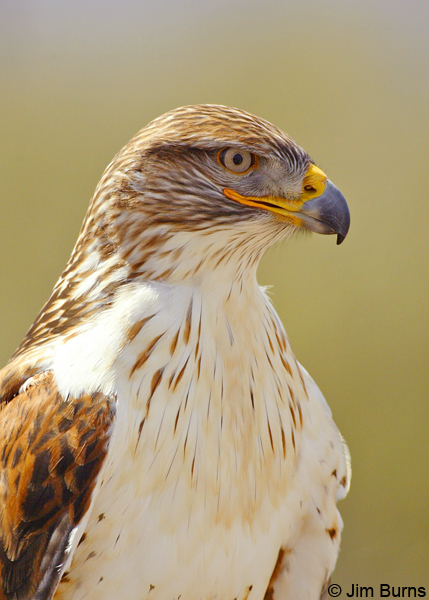
That species is the Ferruginous Hawk, a large and majestic Hawk that sometimes seems more like an Eagle. While the Great Horned Owl is the baddest of the local Owls (yeah, that's right!), the Ferruginous Hawk is the baddest of the Hawks.

What makes them so impressive?  It's a combination of appearance and attitude.  Say you are walking in the plains and you surprise a Ferruginous Hawk.  There are probably two things that you notice right away:  it's huge, and it's coming right for you.

Let's start with appearance.  The Ferruginous Hawk is the largest hawk in the world (well, it's a tie, actually, between the Ferruginous Hawk and the Upland Buzzard of Asia), measuring 4-5 feet from wingtip to wingtip, and weighing 2-5 pounds.  In comparison, small Golden Eagles have 6 ft wingspans, and weigh ~5-6 pounds.  Ferruginous Hawks stand tall and proud with a regal posture, which perhaps is why their Latin name, Buteo regalis (royal hawk), fits them so well.  They're so big that they're often mistaken for Eagles.  In fact, numerous species of Eagles around the world are actually smaller than Ferruginous Hawks (it's takes more than size to qualify as an Eagle).

Jo Matson
Along with being big, they're also beautiful, with striking coloration and features.  The most prominent color on their undersides, whether they're flying or perching, is white (except in dark morph varieties).  Their backs and the tops of their wings are darker, with rusty-reddish upper backs and shoulders, and rusty-reddish feathers on their legs.  The rusty leg feathers are what give the bird its common name, Ferruginous (iron, rust).  The feathers on their legs are doubly notable because only one other Hawk in North America has feathers all the way down to its feet: the Rough-Legged Hawk.

David Quanrud
But it's when you look at their face that you see what an amazing bird this is.  They have pale eyes that look right through you, long beaks, and a giant gape (mouth).  This all lends a very dinosaur/predator/no-nonsense look to them.

Then there's the attitude.  If they're mistaken for Eagles based on size, the same mistake could be made in regards to attitude.  Ferruginous Hawks are mean and wild, and have no qualms whatsoever about defending themselves.  When the Humans are taking care of an injured Ferruginous Hawk here at the RMRP, only very experienced catchers take on this bird.

The reason for this intense attitude could stem from where these birds live: on the plains.  While nests will be built in trees if they're available, Ferruginous Hawks usually nest in open areas such as rock outcrops, or simply on the ground.  The plains environment just doesn't provide many protected nesting opportunities.  Since nesting sites are so exposed, the birds have to be able to defend themselves not only from aerial predators like most Raptors have to, but also from terrestrial predators like Coyotes.  And if the chicks are on the ground for the first month of their lives, you can expect the chicks to be as fierce as the parents.

Baby Ferruginous Hawk at the RMRP. Chicks have a buff-colored bib. 
Being a plains bird, the Ferruginous Hawk's diet includes a wide range of Prairie critters.  The staple food items are the Black-Tailed Jackrabbit and the Prairie Dog.  Other prey includes anything from tiny Meadowlarks to enormous White-Tailed Jackrabbits, which weight twice as much as the Hawk.  The birds hunt in a variety of styles, including hunting from tall perches or low rocks, soaring, or even waiting on the ground next to a rodent burrow for lunch to appear.

Ferruginous Hawk on a power pole
As you can imagine, with Prairie Dogs making up a large portion of the Ferruginous Hawk's diet, the Human penchant for exterminating Prairie Dog towns has been hard on the Hawk's population.  While the birds are hovering around "species of concern" status in the US and Canada, the birds are officially classified as Threatened in the state of Colorado (along with Burrowing Owls for similar reasons).  Not only is their prey-base disappearing, but so is their habitat as much of the land is cultivated, irrigated, developed, or ranched.  With such large wingspans, these birds also have frequent run-ins with power lines.  Sadly, many Ferruginous Hawks are shot, as well.

If you see a Ferruginous Hawk in the wild, consider yourself lucky!  Be sure to appreciate its awesome beauty and power, and wish it the best of luck out there in the harsh plains environment.

Saturday, July 14, 2012

Thank you! Have some pictures!

Huge thank you to everyone has donated since I wrote my baby Kestrel plea earlier this week!! It's been very helpful!

And, as promised, an update of the tiniest Kestrel!  Except...he/she's not really very tiny anymore.  Her/his weight has stabilized around 130g, and that's just three weeks after being admitted at 29g!  Those youguns can really pack it on. 
At 29 grams and ~7-10 days old = cute!
At 130 g and ~1 month old = not so cute? You decide. 
The chick is still covered with lots of fluff, but has begun growing in flight feathers, which is where most of the calories are going for now:
Flight feathers growing in on the left wing
And now that the chick is old enough to live with a role model, he/she has been given a roommate, a male Kestrel also at the RMRP for rehabilitation:

Chick and father-figure

Again, thanks for the donations!  I'll keep posting pictures!  Also, check back soon for pics of the newest young kid: a baby Swainson's Hawk!


Wednesday, July 11, 2012

Why Mississippi Kites Are Amazing!

It's been awhile since I've done an installation of "Why ___s Are Amazing", and I apologize for my tardiness.   Perhaps it's because most of the birds at the RMRP right now are American Kestrels, and I've already covered that species?  Whatever the reason, I decided to make it up to you by covering a bird that's really unique: Mississippi Kites.  Okay, so they're not actually that unique.  They're actually quite common birds--just not around here, which is what makes them "unique" to us.

So, the funny thing about this article is that I knew nothing about Mississippi Kites before writing it, so in order to find all the information I wanted to tell you, I (GHOW) interviewed a Mississippi Kite (MIKI) here at the Rocky Mountain Raptor Program.  This bird is currently healing an injured wing.  Here's what I got!

The interviewee
GHOW:  Thank you for joining me today.  How is your wing feeling?
MIKI:  Squeak-choooo!


GHOW:  Oh no, do you have a cold as well?
MIKI:  Squeak-chooo!!


GHOW:  Well, that's terrible luck, isn't it?
MIKI:  Squeak--no cold--chooooo!


GHOW:  What?! Oh! You're not sneezing, that's just how you talk!
MIKI:  Squeak--That's right!--choooo!


GHOW:  Okay, I'm getting the hang of it.  You know, that's funny, you sound just like a squeaky toy!
MIKI:  Har. Har. Har.  Like I've never heard that before. Squeak-choo!!


oklahomabirdsandbutterflies.com
GHOW:  Right. I can see we started off on the wrong wing, so let's try again.  How is your injury?
MIKI: Better, thank you, but I still have a ways to go.  Squeak-choo!


GHOW:  Glad to hear it's improving.  So, where are you from?
MIKI:  Well, I'm from Mead, but I have a lot of relatives in Sterling and in Pueblo.  But most of my species live further east, in the Midwestern plains and down south.

GHOW:  I see, so that's why I've only met a handful of Kites?
MIKI:  Yep, that's right!  We're kind of new to the area.

GHOW: Well, welcome!  Glad to have you! It sounds like you're pretty social birds?
MIKI:  Absolutely!  We live in communal roosts, like Turkey Vultures.  So wherever you see one Mississippi Kite, you're likely to find more.  Squeak-chooo!


GHOW:  Now, correct me if I'm wrong, but I think I overhead another bird say that you only eat insects?? 
watchingthesunbake.blogspot.co
MIKI:  Squeak-chooo!!!!  That's mostly right.  I loooove grasshoppers and dragonflies, but the smaller bugs are good, too.  Occasionally I'll nab a small mouse, or maybe a lizard, but bugs are my meal of choice.

GHOW:  Blech, you can have them.  I'll take a tasty rabbit any day.  Of course, you might not be big enough to take down a rabbit.  How big are you?
MIKI:  Last time the Humans weighed me I was 250g, so about twice the size of a Kestrel.  However, some of us are a little smaller, and some are a bit bigger, about three times the size of a Kestrel.  But even though I'm bigger than a Kestrel, check out my feet:  they're pretty small, right?  So I don't think I'll be hunting rabbits anytime soon.

GHOW:   How do you hunt bugs, anyways?
MIKI:   On the wing, like a swallow, but instead of catching bugs in my mouth, I catch them with my feet, and that makes me a Raptor!  Squeak-chooo! 

GHOW:   Fascinating.  So tell me a little more about your lifestyle, like where you like to build your nest, and stuff like that.
MIKI:   We build our nests in trees, so we always live near woodland.  Out here in the plains we try to find a little riparian forest to call home--after all, water is important for the bugs we hunt.  We make our nests out of twigs, and I must say, they're pretty good by Raptor standards.  The lady-Kites usually lay two eggs per year, and the young are out of the nest nice a quick: one month in the egg, one month in the nest, then fledged and gone.


GHOW:   Do you make a migration?
MIKI:   Yes, most of our populations do. We fly to tropical South America in the winter!

GHOW:  By the way, I just wanted to comment on how beautiful your eyes are.  Most Raptors have dark eyes, or yellow eyes, but yours are bright red!
MIKI:   Cool, huh?  The immature Mississippi Kites don't have red eyes--they're brown.  In fact, immature Kites are streak-brown all over, with none of this striking grey-and-black motif of the adults.

Immature MIKI  (avianweb.com)
GHOW:   This has all been very educational for me--especially learning a new language!  I only have one more question for you:  what makes Mississippi Kites awesome?
MIKI:   I can't name just one thing!  How about three?  1) Our aerial acrobatics when we're catching bugs on the wing,  2) Our appearance (a lot of Humans think we look a bit like Owls, and most Humans don't even recognize us as Raptors), and 3) Our unique call!  Squeak-choo!! 


Well, folks, there you have it!  Now you know a little bit about Mississippi Kites.   Until next time, squeak-choo! 


Saturday, July 7, 2012

General Update - belated!

I know I sound like a broken record, but it's busy season!  If you've ever been to one of our awesome Behind the Scenes Tours then you'll have seen our main treatment room where all the birds' medical records (called SOAPs because each entry addresses four key items: Summary, Observations, Assessment, Plan) are stored in a large wall rack.  If you toured the facility a couple months ago, you would only have seen ~20 SOAPs on the rack.  Now there are ~40-50 on any given day, and the big dry-erase board with the cage map on it shows birds in almost every cage.

First of all, like usual, let's celebrate releases!  The Humans released ELEVEN birds since the last time I wrote!  Most were young American Kestrels who came in orphaned and...well...young.  They progressed through feather growth, flight training, then Mouse School, and were then released back to the wild.  Other birds that were released were an immature Red-Tailed Hawk, an immature Swainson's Hawk, and an immature Screech Owl.

Of course, being busy seasons, the Humans admitted 22 birds in exchange for the 11 released.

Specifics: there are currently twenty-three American Kestrels in house!  Most of those are kids who lost their family or had their nest destroyed.  A few of them have more difficult injuries, like broken wings and head trauma.  For more info on baby Kestrels, see the previous post.  Four of the baby Kestrels currently in residence include a nest of four kids which was disturbed when someone moved the tractor their parents had built the nest in.  What can I say, us Raptors aren't always the smartest animals out there.  Also, the 100th bird admitted this year was an American Kestrel kid.  Surprised?

Another bird is a second-year Peregrine Falcon with high-voltage trauma (HVT).  He's actually doing really well, which is surprising for HVT birds. Those injuries are usually horrible, but they don't express themselves for a few days.  But this guy is doing alright, and feathers are crossed that he'll heal well enough to be released.  The only thing holding him back is some damage to his patagial tendon, the one that plays a key role in wing retraction.  As long as that heals, he'll be a free bird.  Again, feathers crossed.


Also, there's the Eastern Screech owl that was admitted a couple of weeks ago.  He's the sibling of the one that was released last week.  This little guy is a pistol, and you can be sure he'll never be caught by a cat again.  In fact, maybe he'll teach the cat that's brought in three Screech Owl kids so far this year a lesson or two.

And, finally, remember the Bald Eagle that has taken so long to remember how to perch, fly and land?  She's doing so well!  The Humans have removed all the "easy" perches from her cage, so now she really has to work to coordinate flight and perching, and she's excelling at it all.  A release soon?  Let's not jinx it!

Despite being busy season, that's all the bird news I have!  In other news, the High Park Fire is 100% contained, the smoke level is bad only ~ 1 day a week any more, and there had been lots of rain recently.  However, rain in a burn area is bad news in it's own right, and Humans are now dealing with flash floods.  Sigh.  No one is going to forget the summer of 2012 any time soon, are they?

Thanks for your support!  Don't forget that you can subscribe to the blog with the email link in the right-wing bar, and that I can always be reached by email at talonsofdoom@gmail.com.

PS:  Only two weeks remaining in the photo contest for next year's calendar! Details here.